We left the sweltering hot "bi-modal" bus/ train station on the 2 carriage Red Oriental train. It is a luxury train and faster than the more local train down to Quijarro, a short distance away from the border. It's majority travellers on the train with a few local holiday families.
The train has reclining seats, a lounge like area, in transit movies and dinner and breakfast included - similar to the magic bus, but on tracks.
It is still a basic service and far from any train you are familiar with. 1) the tracks are as bumpy as a cattle grid. Up, down, left and right you are thrown. Think of being in a popcorn machine! 2) track changes are a manual process. The train stops, someone jumps out, pulls (heaves) on a leaver, changes the accompanying sign and hops back on again 3) getting the train moving and up to speed is the most interesting ... You hear the revs going up, then the clutch goes in and the driver changes gear - it must have been a truck engine mounted on the chassis. Whenever the required revs were hit, again the long winded gear change. Someone described the train as a bus mounted on a train. I'd say this was a train mounted on a bus! 4) movie time. A movie had just started when someone got up and went forward to speak to the driver. His assistant then stopped the movie and replaced it with another from the passenger. The movie was one that had just been released on the main movie circuit a week earlier, so obviously pirated. It still started with the warning to beware of illegal copies. Another passenger request and we English subtitles appeared.
Dinner was served and we chased the bouncing food around our plate and then when caught, tried to get it into out mouth! I gave up with the game and tackled the chicken and rice with my hands.
Mands went to try and go to the toilet before bed and came back in a huff as a family had set up camp in the toilet with their son who wasn't feeling well, then father then mother pre bed toilet rituals. We eventually figured you could jump from one coach to the other to use theirs.
All said it was quite enjoyable. Sunrise woke me at 4:30 as there weren't and curtains. Lush green vegetation on grasslands and forests of palm trees. Now we're getting close to the Pantanal.
When the train arrived at the station the paid for carry our bags for 5 meters off the train porters brought out bags out and we shared a taxi with a Swiss couple to the border. It's only 2 km there, but taxi is your only option.
Now we were at the Bolivian side border queue. We chatted to 2 Scottish/English couples. Hot as a hell and 2 hours to wait for the queue to progress. We saw enterprising sales of fresh cut fruit,
Street cart slush puppies and fresh orange juice. When inside the office we passed through seamlessly. When we were in the office, I jokingly said that was the short queue and Brazil side had the big queue. I'd be more right than any of us would have liked...
Our group now of 8 travellers walked around the corner to join a queue 5 times longer than what we'd just been in - must have been 1000 people. Gumph.
Almost immediately someone approached The English guy and said to give him our passports and he'd get them processed directly for us - no costs involved. Warning bells rand for all of us. A few questions and challenges later we would give it a go as long as 2 of us could go with him. After passing a few grumpy Bolivians our passports were in and paperwork and stamps done. Afterwards someone explained that they fast track tourists into Brazil who have money to spend and they put red tape up for Bolivians wanting to cross the boarder, often for work.
We'd not changed our Bolivian Bolivianos currency for Brazilian Reals as we expected to get better rates on Brazil as we'd done on other crossings. That was not to be here. Brazil side has no cash machines or anyone looking to exchange money. All 8 of us were stuck without and Reals. A Brazilian offered to help and said he'd pay for us bus tickets and we could pay him at the station. With little options available, we gratefully accepted and headed off with one cautious eye open. Turned out he was a tour operator and would take the 1 hour 2 local bus transfer time to try and sell us his tour or get us to change any existing bookings. We had ours all sorted, but the others ended up going on his tours (later finding out they would be oversold what they expected). He bought us ice cold waters and soon we were at our bus station.
At Corumba he handed us off to his friend, an old man, who would take us to exchange money. He asked us to wait around the corner while he got the best possible rate and then called me around. I looked through the security gate of a house on the corner with a large money fixer guy with a calculator. He wanted to know how much money I wanted to exchange and them told me the figure. I didn't have time to calculate this myself so took my time to calculate everything and double check - he got the huff with this and said fine, deal off (and there was no one else around to exchange). The old man smoothed things over and the deal was done. Back at the buss station and where the Mand's tour company operated from, he had given Mands the hard sell, but she held onto hot original booking where others would have taken a bite from then serpent's apple.
We had an hour to kill before our bus transfer to Miranda. More card games and a bite to eat. Similar to Peruvian empanada's are Brazilian Saltados, pastry filled with meat. It was fantastic and at a small bus terminal!?! They had a bakery in the back and we shared a few when each fresh batch arrived. Each time I ordered and paid I thanked the store in my best newly learnt Espanyol. Each time after a correction, I'd remember I should be speaking Portuguese! This was going to take a few days to get right.
Hello Brazil!
Our South America adventure...Ecuador, Peru, Bolivia, Brazil, Argentina and Chile.
Showing posts with label Bolivia. Show all posts
Tuesday, 19 February 2013
Bolivia - Santa Cruz
Santa Cruz was only a one night stop over before we could get onto the overnight train to the Bolivia Brazil border. It had been go go go before then so we were looking for a relaxed don't need to do anything time. Mandy, our always impressing travel arranger, found a place with a pool and 2 options for accommodation, regular room or tent. Tent sounded more interesting, so we went with that.
From the bus station, we caught a taxi to the train terminal to see if we could book the Red Oriental train for the next day, but the office was closed and would only open a few hours before the train would leave the next day.
We caught a taxi then to our accommodation spot, xxx, run by Tom / Thomas, he German owner. He explained that he rents the large house from the automobile association and has converted it into a guest house. In the large car port he has setup 3 modern convenience tents with beds, tv, DVD, fans and bedside lamps. A large pool with built in bar was the big draw card in the garden with a young guest house helper on the ready to pour a cervecas from the newly installed draft machine.
We lazed at the pool sipping on drafts and speaking to other guests from Chile and a volunteer who arrived the same day - she told us of a bed and food accommodation programme that exists where she works on projects for people for free in exchange for her living being provided.
We asked Thomas for food recommendations in the area and he said if we're interested there's a street parade happening that evening he'd recommend going through to. I thought this was like we'd seen in most towns in out travels and asked how log it went on for, expecting 15 minutes. About 3 hours was the answer. Turns out we'd hit the Carnival practice night. Carnival week is big in South America and this is a full blown trial event.
We went through and the roads were packed with families for the spectical. We found a spot on the main road for pizza and beer and the show began. Band and dance act after act came through. All shops seems to be selling beer, foam aeros spray cans and anything that lights up in the dark.
3 local guys started a conversation with Mandy and bought us beers. We had great broken English / Spanish conversations and every couple of minutes a "cheers" being one of the few English words that one guy knew. He was quite taken with Mands and when wanting to become Facebook friends, Mands cautiously decided to give him her name spelt incorrectly. We stayed until midnight until the parade finished and headed back to out tent as the lads went in search of the next party.
The carport tent sleep was comfortable with the fan, but would take some getting used to the main road traffic in the morning.
We had a great breakfast and further lounged at the pool and a quick Skype with Gazza and Trace. We headed off for lunch, but the directions I had heard took us no where near a lunch spot, so we made up our own way and found a popular local chicken roticary. A final catch up with Thomas and we made our way to the train station early to ensure we could get tickets.
An English speaking tour guide chatted to us in the queue. We've found Bolivians really friendly and always interested to know where we are going in their country.
With 3 hours until the over night train and a swelteringly hot day to make it through, we bought our 2 litre coke bottle and cups from the cafe and sat under the umbrella at their table, brought out the Galapagos card pack and settled down for many games of shithead.
Just before boarding the train, I bought our last BOL 1 packets of Chesitoz crisps and chew sweets and boarded. Also had to buy our final terminal tax (bus, plane, train terminals all make you pay tax individually, not included in your ticket price - no ticket no leave the terminal - these have been a constant pain to remember) Our large back packs couldn't fit on board, so I went to check them in - had to pay BOL 10 per bag for a baggage handlers fee to carry the bag from the desk, back to the train!
All aboard for a crazy train trip, gears and all...
Bolivia - Sucre
With only 1 night in Sucre we showered and headed out to explore. At the end of our block was a plaza, one of the nicest I've ever seen. Again trees and plants landscaped all around. We walked around the streets to the market and then returned to find a restaurant. Trattoria was a modern Italian and more restaurant with fantastic food.
Mands and I decided to make the most of Sucre and head out on an early morning walk before hotel breakfast and our taxi to the airport. It's good to be down from such high altitudes, so we both had a good spring in our step (still not as much spring as trying to keep up with Mom's morning power walks). The market was just opening and Mands remembered Albert's recommendation for the fruit juice section. We arrived there with every type of fruit I can think of and more displayed at each of the fruit juice ladies stands. We selected one, or rather she selected us, and we starred up at the list of fruit on the board in Spanish. Some more usual fruits we could work out, others no clue. We selected our combinations and for BOL 6 (£1.20) you had enough fruit juice blend for 2 large glasses.
As we were leaving I saw 3 shoe polishing boys about 8 years old, order a small fruit juice each and counted out their coins and paid. When they had their juice, I asked how much it cost and seeing another boy join then ordered another juice and paid for the others drinks. no sooner had I done that when another 2 appeared. Everyone got their morning juice and I hurriedly headed off before the rest of the city's shoe cleaners heard.
Back to the hotel and off to the airport with Mands and I saying, this will be one of the regrets on out trip, not having longer in Sucre.
At the check in desk, that wish would be granted. The flight time was brought forward 2 hours and no one notified us. The airline counter rep then had a go saying we didn't supply a Bolivian phone number so they couldn't contact us - Mands then jumped down her throat as they have our email and no one asked for a Bolivian number. After this sparring went on for a while, I took over so we would be able to fly at some point with this Airline again. We were eventually re-booked for the following day. More time in Sucre granted.
Same instructions to the taxi and we arrived a second time without a booking at the Grand Hotel and again took their only remaining room (a different one this time).
We did some Sucre city attractions research on Trip Advisor over another favourite Picque Macho lunch, plotted our route on a map and headed off.
First was the view from the monestary. Finding the well disguised entrance, we were allowed in, signed the guest book , paid our nominal entrance fee and were given the keys to the roof. Up to the little door and we had reign on the roof. We could get good views of the city, but with the rain starting up, we took a few photos in the bell towers and headed down.
Next was the room of masks. En route, there was an unexpected parade through the streets - we've half come to expect one of these each day now. in the mask room, We couldn't take any photos, but there's an exhibition of their festival masks in dark rooms with only the masks and dress light making them seemingly float. The room is an erie place and you half expect the masks and arms to reach out at you.
Earlier we'd seen a flier for a bar with samba dancing and if you arrive an hour before it kicks off, you can get a free lesson. Mands was up for this, so we raced back to get ready and back at the bar for the lesson.
Only the manager and a few friends were there, so no lesson, so we sipped heavy handed happy hour cocktails and before we knew it people arrived and the samba started. Everyone danced in couples and Ben would ask the women. No age barriers here with the older guys picking off the younger blood first. We were a good few cocktails down and had drunk on our dancing shoes. Time to shake a hoof!
We took to the dance floor like a duck to ice, creating our own fusion of samba like foot kicking together with spins and turns learnt in the best sokkie halls in South Africa. Even if no one else did, the Pisco Sours did say we were great dancers!
Again we checked out the next morning and taxied to the airport. This time we were able to check in fine. We waited at the small restaurant area to board and I got a tap on my shoulder. It was the taxi. I had forgotten to hand in the hotel key! How the hotel had notified our specific taxi and how he'd found me again, we have no idea, but BOL 30 (£7) later the keys were on their way. And so were we, off to our last stop in Bolivia, Santa Cruz.
Bolivia - Uyuni to Sucre
An hour after we'd stopped 2 police men on a motorbike sped up and the everyone not protesting ran to their cars or onto busses with the feeling it would be resolved soon. 5 minutes later it was. We were glad this time it was fairly short as they can continue a full day.
On the road again and about half way there we stopped for the drivers lunch and pit stop for us. This is always a site as men and woman leave the bus and head out, for a "bush wee". Usually there are animals dotted in between us and with pigs and chickens, this stop was no exception. Why does everyone head to the bush, well there's usually one smelly toilet and you have to pay to use it.
Waiting to board the bus a well inebriated guy started a conversation with me for some friendly banter and soon more joined. The Bolivians are proud of their country and very interested in hearing where we've been and query where were going. One of these men was on route to Potosi to the miners 2 day fiesta we'd heard about previously. He suggested I join him as it's a fantastic weekend - I figured alcohol, dynamite and masks sounded like a party to skip this time. His English was good and he went on to explain that he'd previously been a miner and was one of the few to get out alive. He joked about this, but he must be quite a person to be able to turn his life and his familie's lives around - he studied languages while he was still working in the mines and can now speak, read and write 7 different languages. This enabled him to become a guide and now works as a Salt Flat tour guide.
On board the ex-miner came past me seated and warned that we shouldn't sit in the front or back on the bus - that's where people die in an accident. We've little choice most of the time where we can sit, but have taken it on board. Just that day leaving Uyuni we passed a bus we'd heard about that had driven into a river and many had drowned. The next day after this bus trip the local news reported 3 crashes involving 4 busses with a high number of fatalities and injuries - we saw photos of the busses and there wasn't much left of the front 3 rows of each. Bolivia is notorious for their bus driving and accidents, we hadn't had or heard of and problems until now. In the first 24 days of January Bolivia had 12 major road accidents and 79 people dead. A full investigation has been kicked off in Bolivia and days of news coverage, but no mention in international news. We are grateful a safe hand has been kept over us.
We arrived in Potosi where we had to get from ex terminal to new terminal. The bus driver and side kick were hugely unhelpful shouting in Spanish and expecting us to understand everything. Eventually we got sorted out and on a new bus to Sucre.
Up until this bus route, the landscape was quite barren, descending down quickly towards Sucre, with each mountainous twist and turn, the vegetation became more green, more lush with streams and trees. In total contrast to Potosi's largely bleak buildings, colonial ranch houses began to appear with orange walls and tilled roofs.
The bus entered Sucre at dusk and immediately you could see it's more affluent than the rest of Bolivia we'd visited.
Bolivia - Uyuni and The Extreme Fun Pub
Now we had heard bad things about Uyuni, it's a one street town, get in and out as quickly as possible but clearly these people had not found the Extreme Fun Pub!
We arrived on Sunday afternoon in the pouring rain, a bit panicky about what the Salar (Salt Flats) would look like the next day if it remained grey and raining. And yes, the reception at the hotel was the grumpiest we have yet to experience and it's maybe a two street town full of agencies. We spent around two hours visiting the tour agencies and trying to decide which would be best to go with. We eventually went with Quechuas as they seemed most honest, gave us loads of information and had good reviews.
After this we found the Extreme Fun Pub which a girl in Potosi had told us about. It was what it said on the sign. Extreme Fun with crazy drinks and friendly staff. As we arrived there was an Australia couple lining up to do the drink challenge. It's 10 drinks with various concoctions and in some strange drinking vessels. Single attempters, couples and water only race times are recorded along with name and country and stuck up all over the pub's walls and roof. The Aussie couple did well, but no where near the record and didn't need to use the toilet bowl brought out in case.
We didn't attempt the challenge, but did try some of their other brews. It wasn't long before we'd joined an English couple and Was convinced us to have a barman special - effectively asking the bar for a recommendation and going with it. A drink for hombres and mejeres. If we get brave enough to post the photos, you'll see what the "sexy llama bitch" and "Bolivian hen night" looked like!
If in Uyuni with a couple of hours to kill, go - as Was has told others along the way, it will be memorable!
Bolivia - Salar de Uyuni
We awoke to glorious blue skies and could not wait to get on our tour which only started at 11am.
We met our fellow tour goers, a Portuguese couple, Albert and Enish, an Austrian Lukas and a Chilean, Lisandro who was just joining us for the first day to the Salar.
First stop was the train cemetery where we went a bit crazy with photos. Was and I were definitely having our 'Bond' moment up on the train roofs.
The Salar was beautiful. Blue skies with clouds dotted about reflected by the layer of water which covered the salt flats. It is an incredible site, looking out across the flats and seeing no horizon, just the sky merging with the reflection of itself.
It would be interesting to see the flats in the dry season. I imagine it would be a very different experience, but just as beautiful.
We spent about an hour taking the obligatory crazy pictures before being called across for lunch by our driver Miguel. We had alpaca steak with quinoa and salad, all very tasty.
After lunch was a speedy ride back to Uyuni where Lisandro was dropped off and we picked up Paul, an older German man. He had tried to get to the Chilean border by bus the previous day but they had to turn back as the road was such a state. He was hoping the 4x4s would get through today. We sped off nervously hoping we would be able to get through. Albert and Enish tried to get their train tickets to leave Uyuni after the tour but the queue was massive due to a bus having rolled over the night before and there had been some fatalities. Everybody wanted onto the train.
Just out of Uyuni we saw the reason the bus and some of the tours had turned back the day before. The river had flooded across the dirt road completely submerging it and washing away parts of it. A truck had also rolled over making the road single track for a part. But the tour 4x4s were going through as well as some buses. It was pretty scary but Miguel did us well and got us through. We made it through to the first camp at sunset and headed off to take some photos. Although it's hot in the day, at altitude here the temperature drops considerably. There was no hot shower either, so a quick wipe down (thanks Mom) and Was and I climbed into our Bolivian happy pants (the super bright coloured ones.) Chicken Milanese for dinner and we headed off into our 6 sleeper dorm ( the tours are basic - we tried to find a more expensive one that offered double rooms but had no luck). There was a bit of grumbling from Paul the German man, clearly he had not asked about what accommodation he would be getting.
7am breakfast the next morning and another beautiful clear blue sky day. We headed out across the altiplano and it was breathtaking. Lakes and volcanos with vicuña and flamingos, it was like nothing we had ever seen before. We stopped at Laguna xxxxx for lunch and it watched the hundreds of flamingos. Just magnificent.
When we had booked the tour we were uncertain if we'd make it any further down to Laguna Colorada, a large red mud lagoon at around 5000m altitude, where nearby we would spend he night. The local villages were having a dispute with the national park and tour operators over income. Apparently the larger village got more of a percentage than the smaller one, and the smaller one wanted the same. Luckily talks had started and not yet come to a halt and it seemed they wanted some income while the talks were happening so we were allowed through on arrival. We took a half hour break at the camp before setting off across the desert to Laguna Colarado, where we strolled along the side of the lake watching the flamingos.
Dinner back at camp was Piqué Macho, my favourite Bolivian meal! We even got a bottle of wine to share amongst the six of us with our meal. Miguel came in at 8pm to inform us that we'd be able to go to Laguna Verde, the geysers and hot springs. And that we'd need to be up for a 5.30am departure. With that he said good night.
Our final day was hair raising. We were up early and headed out to Laguna Verde. Miguel, our driver, was shattered. He had had a headache the previous afternoon and asked for a headache tablet. This morning he couldn't stay awake. We don't think there was any partying involved but maybe he was getting sick but it was a problem. Albert, who was sitting behind and opposite Miguel had to wake him up. Luckily Albert could also speak Spanish and told him we needed to take a break. We stopped to take some photos (including some jumping around ones with Miguel in them to try and shake him out of it). After that he was okay to Laguna Verde where I noticed him getting some coca leaves off one of the other drivers, they are used for alertness. We stopped off at the geysers and then hot springs for a swim and breakfast and then nervously got back in the 4x4. We were then okay to the Chilean border. We had placed Albert up front to chat to Miguel and keep him awake.
After dropping Lukas and Paul at the border we turned to make our way back to Uyuni. We had 3 hours to lunch and then another 3 hours to Uyuni. It was a pretty hair raising 3 hours to lunch. Albert had to wake Miguel twice. We had strapped ourselves in as securely as possible and concentrated on keeping everyone awake. We made it to lunch and decided between the four of us that we could not carry on the trip and our options were 1 - to switch into another car, 2 - convince Miguel to spend the night, get some sleep and we'd go early the next morning or 3 - ask the office to send someone out if we could get a line through to them. Miguel was having none of these options at first. We tried to explain it would be better for everyone if he let us switch. We started to realise he didn't want to let the office know of any problems so we explained the situation to the Chileans in the other truck who had space. They had no problem with us switching so we approached the other driver who wanted nothing to do with it. Albert eventually managed to negotiate with Warren backing up that we didn't want to cause problems just needed to be safe and would switch back outside Uyuni so no one got into trouble. This finally worked and we were allowed to switch out until the last town before Uyuni.
Miguel survive his lonely drive back to .... Thank goodness. We'd been pretty stressed about him still driving, with how he was struggling to stay awake. We bought some red bulls, and climbed back into the car with a very energetic Miguel. I think a lot of coca leaves were consumed in the solo drive!
Warren volunteered to take the front seat, armed with his Spanish phrase book, thinking he could kill two birds with one stone, that his practice his Spanish and keep Miguel awake.
After a lot of page turning, thinking, page turning and thinking Warren turned to Miguel and asked 'Es tu mechanico tambien?' to which Miguel replied 'si si' and went on to explain how all the drivers are mechanics too, as the roads are so lonely they pretty much have to figure out between whoever is there how to fix the problem. At this he started indicating and pulled over. We had a flat tyre. All blamed on Wassie!
The spare didn't seem to fit. Two more trucks pulled over and with a lot of juggling of current tyres and spare tyres between back and front wheels we were back on the road. Warren was banned from any questions involving vehicles and we made it safely. Ack across the now much lower river and to Uyuni.
Bolivia - Death Road, La Paz
We all met up at Alexander's cafe on La Paz's Main Street. A muffin and empanada later and we piled into the minibus and heading out of La Paz. On the city outskirts there's a checkpoint lined with opportunists stalls seemingly specialised in deep fried chicken pieces. The stray dogs theme of South America also continued.
Only about 45 minute transfer to our start. At about 4,200 meters in the mountains it's not unusual for it to be snowing, but we only had cloud and mist. So much, I thought we were standing at the ends of a cliff, but we were next to a lake! Cycle overalls, gloves, helmets and goggles were divided out on route, so we hurriedly got dressed - don't know why they bothered asking for sizes for tops and trousers as mine were more suited to a 12 year old bmx racer - I'd have to improvise with this thigh high crotch.
Our young American guide, Dave, gave the briefing and then brought the 96 percent proof alcohol for an offering to Pacha mama (a drop on the soil and the bike tyre) and then a sip for courage.
The first section is on a tarred road for about 20 Km's for a downhill blitz. You could only peddle for he first 50 meters before you were going too fast to have any traction trying to peddle. We'd easily pass trucks and cars would easily pass us, so it was a constant leap frog down. Good thing we had skiing gloves as it was freezing!
A Bolivian drug checkpoint came up, but we got waved through. Much of the world's cocaine comes from Bolivia - supplying it is big business and farmers apparently get more from coca leaves per sq meter than any other product.
Back on the road and a vote was put to the group to cycle up a 8 km section on load the bikes on the minibus. The not used to cycling uphill in this altitude option was chosen and we had drinks and snacks while the bus climbed the hills. None were particularly big, but altitude would have been the killer.
Now for the start, at La Cumbre, of the gravel Death Road. Already having descended 1,000 meters it was much warmer. I stripped off some layers and Dave gave another briefing. Babies heads! Never heard of them before, but they are loose rocks the size of a babies' head on the road around waterfalls or rock falls. If you touch tour break while you go over them, it's a shute thing you'll get thrown - either avoid them or cycle straight over them with no breaks. Death Road is so the only road in Bolivia where you drive on the left. With the left hand drive vehicles, drivers can see how close to the edge they are if driving on the left rather than right - cycling, we'd follow the same rules.
We headed down, one guide in front for the faster group, pushing limits, and the guide at the back for the slowest rider. I'd do most of the leading for the boys and Mands just on the boys tails and leaving the slower riders in her dust - Wales single track rides are paying off!
The ride was brilliant, sheer drops at some points, waterfalls across the roads, 90 degree and 180 degree turns and sections with so many baby heads it seemed we were in a maternity ward!
Some way down there was a checkpoint and we waited for the group to catch up. Stripping down with the heat of the day and much lower altitude, we hit a new problem, sand flies. These smaller then mosquito bugs, are relentless on attack and attack they did. I kept moving like an early morning workout with my midge experiences, but others less aware of the ways of the wild were eaten like Spur's Sunday eat all you can ribs and chicken wings special. These critters are worse than Mosquitos and leave a hole with blood and an itch that stays with you for the next few days.
Back on he track for the final sections of Death Road (it's difficult to say that without putting on a deep theatrical voice) and the finish of our 2 km descent. We finished in a small village, Cocoico, and were "welcomed" with a bucket of water being thrown by one of the village kids.
For lunch we headed to an animal sanctuary a couple of minutes away. We dipped in the clear water that was flowing too strongly to swim after the rain and then showers. Macaws, monkeys, African guinnea fowl, dogs and parakeets welcomed us to the buffet lunch. A volunteer took us on a monkey walk - she had had her fair share of plastic surgery, so looked a bit out of place at the sanctuary, but clearly concerned for the animals. She warned that if anything is on us, the monkeys would take it - jewellery, money or sunglasses even if in a buttoned pocket would be taken. Cameras would be ok as they are familiar now with them. In cities in Bolivia monkeys have been trained as thieves as you can't prosecute a monkey if caught - we didn't see any of these on our travels. We walked across the river and out of nowhere the first monkey jumped on Mands who obliged with a shriek. Botox told Mands off for scarring the monkeys (!?#^) and the next thing another was on me trying to pry the camera out of my hands - I was more composed right up until the monkey put it's fingers in my mouth to see if there was anything worth stealing inside.
Botox told us some stories about the monkeys behaviours and how they go through the same emotions as us - one cleaned out her "house" each day with a broom, another with a face deformity had attacked one of the volunteers who starred at it constantly.
We returned to La Paz after a 4 hour drive including driving up the road of death - when this was a major transport route it must have been terrifying - we've seen videos posted on the Internet of busses disappearing over the edge. As my Dad would say …scary stuff.
That evening it was my choice for venue after Mandy's disastrous Thai selection and I picked a steak grill that specialises in Jack Daniels whiskey sautéed steaks. When it arrived, out came the JD and it and flames a meter high engulfed the meat. Good start to the South American steak trail.
Bolivia - La Paz
We entered La Paz on a late afternoon bus from Copacabana which meant we came though the satellite city of El Alto. We both sat open mouthed driving through. There seemed to be one main road through with barely a tree and then unfinished brick building after unfinished brick building for miles and miles on end. Our bus driver did some pretty nifty driving through the side streets and managed to avoid a lot of the traffic. An estimate would be 30% of the buildings were unoccupied. The satellite city has now grown so much it is larger than La Paz.
The first views of La Paz are breathtaking, square brick buildings of different sizes clinging to the canyon cliffs for as far as you can see! And it's massive! The city is arranged differently to any other city. Usually the wealthier residents live higher up so they get the great views but the altitude of La Paz (3660m) means everyone wants to live as low as possible.
on arrival at the bus terminal we took an official taxi from the small taxi arranging kiosk - Wassie had read about many taxi robbing scams and decided we should go official where we could.
Our hostel, Cruz de Las Andes, was in a good central location and a clean basic place with matrimonial bed and private baño. With only a few hours we needed to book for the road of death the next day (something Was has been super excited about), so we plotted our route to the nearest Gravity store about 7 blocks away and took in La Paz sights and sounds before booking.
We stopped at a nice chilled bar, Sol y Luna, on the way back and and read a guide brochure suggestion to avoid the Bol 2 (£0.20) burgers from the street stalls dotted around the city like the plague. Also not even to brush your teeth with the tap water as their water pipes are built along side their sewage pipes and are known to be corroded through!
Avoiding the cheap burgers, we went on a search for a late dinner - I was craving Thai or anything with a different flavour! We did find a good looking Thai place and settled in - what a mistake, slow service and terrible cold food. Better to stay local!
The next morning we did the road of death tour with Gravity, the first company to start cycle excursions. It was brilliant, but more on that is a separate post. After the cycle we headed out for a dinner, this time hopefully more luck.
Warren chose steak for dinner (think I wasn't the only one craving non Bolivian food!). I had a great strip steak an Warren had their speciality, steak flambéed in Jack Daniels. Both steaks were impressive but even more impressive was there was a safe looking salad bar although I still avoided the lettuce. And reasonable Argentinian red wine! Fab!
The next morning I hobbled together my Walking Tour of La Paz from the Lonely Planet, trip advisor, a city walking tour app that Was has downloaded and a decent looking tour's website. We started in the black market which was heaving on a Thurs morning. The market sells all sorts from fruit to toiletries to suits to fake goods. It's arranged in areas so one street will be toiletries, another menswear, another household things. One lady was selling bras and seemed to keep her stock on her - a good hundred bras on each arm! Street food too took on a new meaning with people sitting down in the middle of a packed walkway with a large bowl containing chicken, pork, bananas and a few items we couldn't identify all in the same bowl, but sold separately.
Warren was looking for a t shirt - the only person to pack too light. He had only packed four t shirts and one had been retired post amazon mud. On asking the price of the obviously fake Abercrombie and Armani Exchange t shirts we were shocked to discover they were 500 - 700 Bolivianos. (£50 - £70) We're not sure if this was the tourist price or if they're ripping off everyone but these shirts were obviously fake, the labels weren't quite rite, material wasn't great. Anyway Warren declined, he was just looking for a cheap t shirt. The popular fake brands were Hollister, Nike, Abercrombie and then the outdoor hiking brands. But the outdoor shops along the main road between the black market and witches market are at least honest about their goods being fake. There are large signs as you enter saying 'not authorised'. Northface is the most popular of the fake goods with Columbia not too far behind. Our Gravity guide told us about a legendary pair of trousers one of the guides had - a north face label on the outside with Columbia branding on the inside tag. You also spot the odd upside down branding label.
Following the black market we entered the witches market. They sell a lot of tourist things here, alpaca hats, textiles, jewellery. But dotted amongst the tourist shops are witches shops where they sell llama foetuses and other potions and lotions. Llamas are sacrificed for good luck in Bolivia and the llama foetus is a version of this. It will often be buried in the foundations of a new house for good luck. There are also lots of the miniature versions of what you hope for in the coming year here. Shops, money, groceries, cars as well as love and families.
From the witches market we headed downtown the the older colonial area of La Paz know as the museum district. We passed the Casa Murillo, the former home of Bolivia's most important freedom fighter who was hanged by the Spaniards.
Our tour then took us to Plaza Murillo, La Paz's main square which houses the Metropolitan Cathedral, the Palacio Quemado and the Congreso Nacional, all beautiful buildings. We took a seat on the steps with an ice cream and enjoyed the square for a while.
Our next stop was a viewpoint to overlook the incredible city. We had decided to head to xxxxx which was the top rated on tripadvisor.
We walked quite a way, through a park that was still in development and up to the lookout area where we had to pay to enter a kid's playground. You got a view over the city but not quite the one we were expecting. We headed for lunch at Eli's, a La Paz institution which genuinely was. It was packed, we only managed to get a table downstairs right at the back.
We were going to head to the San Pedro prison straight after lunch, but were pretty tired after a full on morning and decided to rather catch a movie in the cinema next door to Eli's. the luxury of having more time away is being able to take a break! We saw xxxxx (Gangster Squad) and were all prepared for it to be in Spanish but it surprisingly was in English with Spanish sub titles. Also discovered they have an interesting way of serving Coca Cola and popcorn. You only need one hand for carrying. See the picture attached. This should go worldwide!
After he movie we walked through to San Pedro prison. We had read 'Marching Powder' a book about an English drug smuggler who gets caught and imprisoned here. It's a crazy jail where the prisoners have to buy their own cells and self govern themselves. It didn't disappoint. On arriving to the prison square there were riot police outside and prisoners had climbed out on to the roof of the prison and were protesting. The main doors to the prison were open, but prisoners held back 3 meters inside by a large barred gate - prisoners were hanging on the gate and setting off fire grenades doused in fuel. We watched for a while. From what we were able to figure out, there is space for 7000 prisoners in Bolivia's jails and there are currently 13000 prisoners. In San Pedro the wives and children often live with he prisoners inside. The government was now evicting any families to make more space for prisoners and the current prisoners were protesting.
We went back passed Sol y Luna and ordered a Piqué Macho, mixed meat, potato and tomato meal we'd seen people eating in Copacabana - we shared this and it was brilliant, we'll be ordering more of these and making them at home.
The next day we did a bit of shopping (Warren needing to add some colour to his travel wardrobe bought one of those faux North Face soft shell jackets in the brightest orange he could find - at £20 he's probably got his money's worth out of it already) , had amazing coffee and cake at Angelito's cafe and caught up with some bits and pieces before hopping on our overnight bus to Potosi.
Wednesday, 30 January 2013
Bolivia - Potosi
We decided to take an overnight luxury bus on the newly tarred toad from La Paz to Potosi, thereby avoiding the overnight trip on the notorious unpaved road from La Paz to Uyuni. We heard many first hand accounts of how bad that jpurney is, including seemingly impossible no bridge river crossings and all passengers having to get out and push through sections. Our overnight trip to Potosi was pretty uneventful bar the no-seat passengers picked up en route. I presume to avoid paying full fare and extra money for the driver, 6 people were picked up en route and sat and slept in the aisle or on the staircase.
We arrived in Potosi as scheduled and grabbed a taxi up to the hostel where we booked on to a mine tour. Potosi used to be the richest city in South America and was larger than Paris or London. It's wealth came from mining the Cerro Rico mountain for silver where millions of indigenous and African slaves died in the appalling conditions underground.
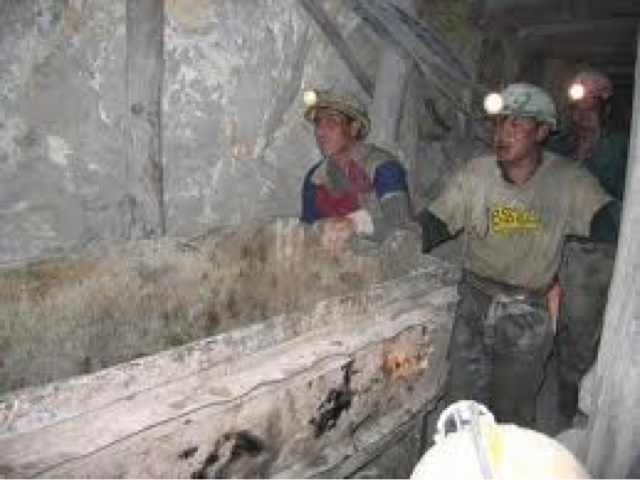
We were met by an ex miner who proceeded to kit us out with mining trousers, jacket, rucksack and headlight. We were driven up to the area of the miner's market to buy gifts for the miners. The serious alcohol abuse problem was apparent as soon as we arrived at the miners market. A man was carried of a bus by the driver, completely passed out, and put on the side of the street. Another man was passed out in the street with buses having to drive around him. I'm not sure if this was just an average Saturday morning but it made me very uncomfortable when we were asked to buy beers as presents for the miners who would be working in the mine we were to tour. We were also shown the the 96% proof alcohol they take into the mines and were offered dynamite for £2.50 per stick. Yes, dynamite - and you can buy it off the side of the street as it it was a cool drink. The stick, wick, accelerator and activation components were handed out to us with a laugh and "don't drop it" chuckling warning. Between the group, beer, coca leaves and dynamite were taken as presents for the miners. I was already feeling pretty uncomfortable by his stage. The guide/ex miner was pretty gun-ho with a massive split lit - not sure if the was from a punch up or dynamite accident but this wasn't adding anything to my confidence in him.
We drove up to the mine on Cerro Rico, the entrance was dug out with a few wood beams supporting it and rails running along the ground along which carriages are run taking the silver out. I was glad it was a quieter day being Saturday and we wouldn't be exposed to lots of dynamite explosions and carriage running that we would have had to dodge - the guide said most of the previous days group was in tears with all of the uncontrolled, unannounced explosions sending dust clouds through the shafts. We started walking into the mines, crouched to half height. Something I have neglected to mention is Potosi is the world's highest city at 4000m above sea level. Now imagine crawling through a dark mine, with no breathing apparatus evident and air that thin. I then began to understand the alcohol use a little more. The working conditions are horrendous. We passed the mine's 'Tio'. Every mine has one and they're a bit scary looking. The miners are generally catholic and believe in God but don't believe God exists or works within the mines instead believing it is Tio, a version of the devil that keeps them safe. Each mine therefore has a figure of Tio to which the miners make offerings of alcohol, coca leaves and dynamite hoping that he will keep them safe.
We were lead through to a small area where we could kind of stand up straight and met the head miner and one of his sons. We were told to give them beer. The mines are worked as co-operatives. At this stage I decided to head out of the mine with another girl. We hadn't had any explanation about how long or far we'd be going into the mines and if there were stages where we could leave. I was starting to feel claustrophobic (I'm not good in caves either) and didn't want to get to far in and have an anxiety attack. We were lead to the final tunnel out where we had to go on our own to the exit. I was very relieved to have someone else with me.
Was made it to the next stop, where they saw the miners working, which is still by hand. One discovered a silver vain while they were there. Warren then came out with a few others and the rest went further into the mine where they let off dynamite.
We headed back to town, avoiding one more passed out drunk man in the road, and back to the hostel. The mines were shocking, the working conditions are probably 100 years behind those in more developed countries, and the miners are risking their lives every day.
That evening we watched an excellent documentary called 'The Devil's Miner'. It follows a young boy who has worked on the mines since he was 10 years old. Now 14 years, he is working to put himself, his younger brother and younger sister through school. It follows his journey to a bigger mine where he can earn $4 per day (his mother makes £0.25 a month). It is definitely worth a watch.
Labels:
96 percent proof,
Bolivia,
coca,
dynamite,
mine,
Potosi,
the devils miner,
Tio
Friday, 25 January 2013
Bolivia - La Paz
La Paz on the other hand is a vibrant uniquely set city that has Central Valley between 2 mountains all the way up it's sides. The buildings are all red brick and everything is built up.
At the bus terminal we took an official taxi from the small taxi arranging kiosk - I'd red about many taxi robbing scams and decided to go official where we could.
Our hostel, Las Andes, was in a good central location and good basic place with matrimonial bed and private baño. With only a few hours we needed to get tickets for to cycle the road of death the next day, so we plotted our route about 7 blocks and took in La Paz sights and sounds before buying the tickets.
We stopped at a nice chilled bar, Sol y Lunar, on the way back and and red a guide brochure suggestion to avoid the Bol 2 (£0.20) burgers from the street stalls dotted around the city like the plague. Also not even to brush your teeth with the tap water as their water pipes are built along side their sewage pipes and are known to be corroded through!
Avoiding the cheap burgers, went on search for a late dinner - Mands was craving Thai. We did fine a good looking place and settled in - What a mistake, slow service and terrible cold food.
The next morning we did the road of death tour with Gravity, the first company to start cycle excursions. It was brilliant, but more on that is a separate post. After the cycle we headed out for a dinner, this time hopefully more luck.
I chose a steak grill called xxx whose
Monday, 14 January 2013
Bolivia - The Cut
He was finishing off with a customer, so we sat down and looked at the photos and sketches of different haircuts available. I had been wearing a cap all the time and when he came to ask what style I wanted, I picked one with a styled fringe and longer back. He indicated no problem. I took off my cap and he burst out laughing! I changed the style to all off short and he obliged. I'd not seen any one flame burn his instruments before starting, but he torched everything before using it.
Good to go.
Labels:
Bolivia,
Copacabana,
the cut
Location:
Copacabana, Bolivia
Bolivia - Copacabana
The Lonely Planet listed out hostels and highlighted Las Olas cabanas as a must stay quirky place if you have cash to splash. Bolivia is the cheapest South American country and Splash meant US $48 per room per night. It didn't have availability on the first night, but the owner had a second slightly cheaper set of cabanas (la Cupula) available next door for the first night.
Arriving in Copacabana after a few rainy cloudy days the sun was out in full force. It's a very small town on the banks of Lake Titicaca (Peru and Bolivia share the lake). We checked in at La Cupula and were wowed with a large room, kitchen, fireplace and hammocks in the garden with views across the lake. A Facebook photo of Mands on the hammock almost went viral with likes!
A short walk to the waters edge and most of the town was down on the playa (beach). It was a Sunday and everyone was enjoying pedalos, boat trips, open air flooseball and lunches. A row of informal restaurants lined the shore with only numbers as their name. No 19 was most full, so we joined them at a table as locals know best. Trucha (trout) is the speciality here and it comes fried in a choice of various sources. We both had Trucha and cervecas - 20 Bol for fish and 18 Bol for large beer (less than £4 each for full meal and 700mm beer)!
After lunch it was a stroll through town and a look at the Cathedral. The priest was walking around splashing water on people's heads if they asked. At the front of the church was the main plaza. Many informal stalls sold items for offerings including flowers and alcohol. Fireworks and miniatures were also on sale - fireworks are used for all celebrations and whenever you feel like it, day time or night time. Tom thumbs were a favourite in the day, I remember these from when I was younger. The miniatures were the most interesting. On the 24th January there's a festival where people celebrate and buy a miniature of what they wish for in the coming year. Miniatures include cars, trucks, groceries, money, types of shops (like hairdresser), gold or building material for the houses. We'd see these on sale across Bolivia.
A few more lazy beers on the hammocks and then sunset. Fantastico.
There's a restaurant on site, so we headed across in our winter woollies (including bright Alpacha hat I'd bought from the home stay). A young boy with his banjo was just getting ready to play - sure we're in for a treat. We ordered a savoury pancake and a pasta and then it started... Banjo boy knew about 8 lines of 1 song and repeated it over and over and over some more and not very well. For some reason a few people clapped when he stopped and that encouraged him. He'd walk from table to table strumming and singing. We tried our best to ignore him, but he made sure we got our fair share of his attention. Eventually he left after my tip to stop playing. Mands thought he must be related to someone who works in the restaurant - he must have been or everyone was deaf.
Our room was cold, but no problem as we had the ready made fireplace and me, a South African who's made countless fires throughout his life. All I had to do was throw the match in and away the feugo (fire) would go bringing heat to my shivering wife. 30 minutes later I gave up starting this fire and Mands was fast asleep - I could barely get the newspaper and kindling to take let alone logs at this altitude! The Bolivians must have a trick or petrol up their sleeves.
We awoke to another bright sunny day. Mandy wanted to stay at La Cupula for the second night as it was so nice, but I convinced her to move as planned to Las Olas (the waves). When we were shown our Las Olas cabana, it was the right choice. Las Olas has 7 cabins, each unique, designed by the German owner himself. Ours was huge, double story with floor to ceiling glass to the front allowing for a fantastic view across the lake. Hammocks inside and outside on the private balcony. The bed was enormous and round and carved wooden chairs and table for meals. The shower even had plants arranged inside it, it was so big. This is how backpacking is meant to be.
Everyone who visits Copacabana takes an overnight trip to Isla de Sol. We decided to skip it and stay at the cabana and town for the day. Lots of reading, resting and hammocking. We bought some fresh salad from the market and together with Mand's left over fettachini, made lunch at the cabana.
Another sunset and sundowners and we decided to head back to the restaurant for dinner. We were quite late, but who should we find there waiting for us... Banjo kid. We sat down anyway, and luckily only got the last 5 minutes of his set. He didn't ask us for a tip this time.
The next morning we had half a day before a bus to La Paz. We checked out, left our bags at reception and set out to find the pre Inca astronomical observatory, Horca Del Inca. It's on the top of a rock hill. When the Spanish Conquestors arrived they destroyed 6 of the 7 rock sculptures, not thinking much of the last one. On the Summer solstice the sun passes through the Horca Del Inca illuminating a specific area. The sculpture is a horizontal rock balanced across two vertical rocks - it itself is not too impressive, but the hike up is is a good activity.
After paying Inca ruin entrance fee to a 8 year old girl that suddenly appeared from the trees at the bottom of the trail and gave us a stick to use as an aid, we headed up the steps carved into the large rocks. The rain started and we continued to climb on the now more slippery surface. The stairs disappeared and we followed faint arrows up from boulder to boulder, sometimes on all fours. Mands decided to stop the hunt and wait under a dry rock overhead. I on the other hand got the pink slip to continue - after my fire starting saga, no Inca Rocks were going to allude me. Up and up I clambered until I reached the almost top - I could go no further with the rain and wet rocks and the white arrows had stopped a while back. With a wet tail between my legs I returned to Mands, empty photo handed. We began out climb down and Mands called over almost immediately, pointing ... There next to where I left her was the Horca Del Inca! We'd completely missed it - I thought it would be at the top, but it was three quarters up. Manly pride restored. Kind of.
On the way back we stopped in town to buy the town fridge magnet - we buy one at each town - but there were not any Copacabana ones that represented anything we felt we'd experienced properly until I spotted a figure of a boy playing a banjo - that had to be the one.
At the same time we bought some snacks for the bus and here is where I discovered the Bol 1 Chizitos (10 pence) chips. We would eat a few of these in Bolivia.
With our bags now collected we headed to a cafe / restaurant for lunch before the bus pick up. They had a large screen tv showing 80's top music videos - Mandy was in her element.
Onto the overbooked bus (luckily we were on first) and we were off to La Paz.
Labels:
Banjo Boy,
Bolivia,
Copacabana,
happy place,
Horca Del Inca,
La Cupula,
Lake Titicaca,
Las Olas
Location:
Copacabana, Bolivia
Saturday, 12 January 2013
Peru / Bolivia - Border Crossing
We've heard all sorts of stories about border crossings and after Ecuador / Peru systems down saga we braced for more of the same. You can get a tourist bus that takes you through the border and helps out with the paperwork, we took this. We also shoved all our US dollars into shoes, underwear etc after hearing that Bolivian officials often tried to confiscate 'fake' dollars.
At the border we were shepherded out the bus, taken to exchange Peruvian Soles and US Dollars for Bolivian Bolivianos. Thereafter a few stamps in the Peru office and then we walked across the border. En route there was the largest bag of popcorn I'd ever seen filled with the largest popcorn I've ever seen. The maize here is large, so you get large popcorn. Like a moth to a flame I had to get a photo and a couple more of the border crossing - this was much too Mandy's disapproval as there shouldn't be any photos at border crossings as she'd learnt from African border crossing days.
The Bolivian side was similar and after an uneventful no systems required manual border crossing we were in Bolivia and off to Copacabana.
The guide books all warn about fake money, especially in Bolivia - that won't happen to us!
Labels:
big popcorn,
Bolivia,
border crossing,
Peru
Location:
Puno, Perú
Subscribe to:
Posts (Atom)